

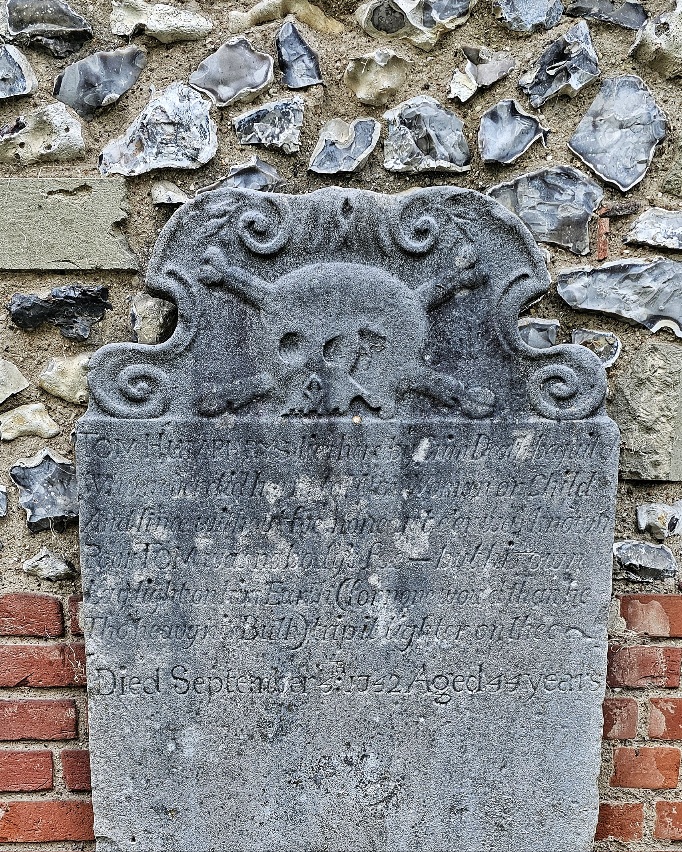
*Historical* This is just one of the theories surrounding an unusual headstone in the ancient graveyard at All Saints, Carshalton. We’ll never know for sure how he died, but the inscription gives a fascinating insight…
According to the report in an old book, Tom was a barber, most likely in Carshalton village. By all accounts, he also liked to dance. Infact, he was described as a ‘famous’ dancer.
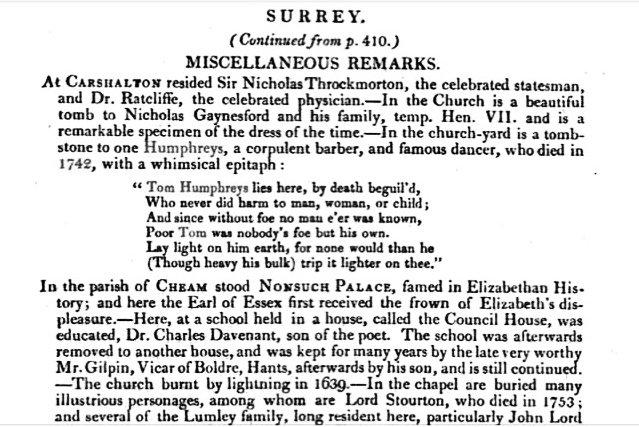
Below is a picture from the book, which said:
“In the church-yard is a tombstone to one Humphreys, a corpulent barber, and famous dancer, who died in 1742, with a whimsical epitaph.” – Was he famous just in Carshalton, or did he have wider fame?
And what do we think those hand-etched markings on the gravestone mean? Let’s take a closer look at the exact words.
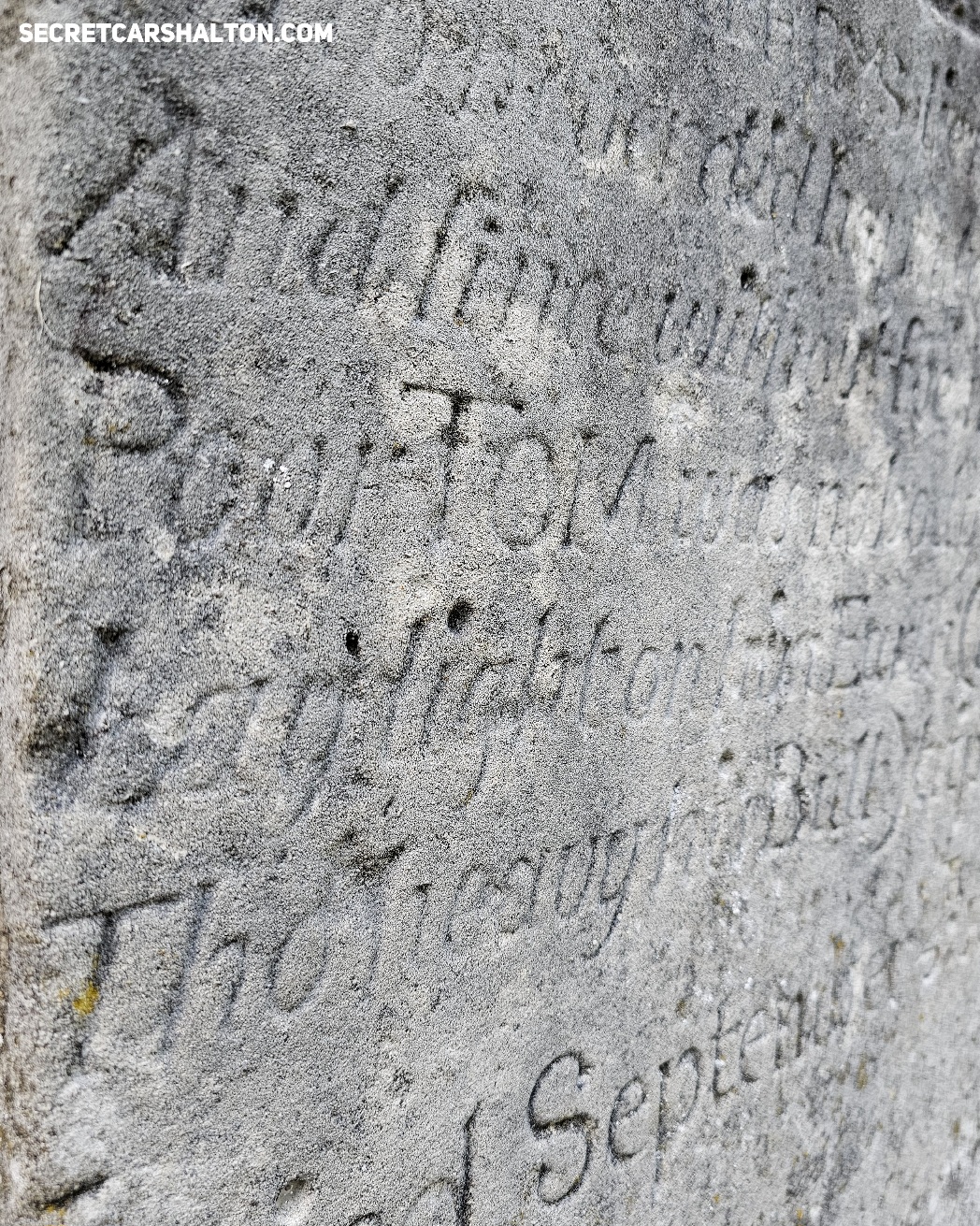
TOM HUMPHRYS lies hereby. Grim Death beguild
The phrase “death beguiled” appears in Act IV, Scene 5 of Romeo and Juliet. In this context, it refers to the idea that death can be deceptive or misleading
who never did harm to Man Woman or Child.
And since without foe, none yet e’er was known.
Suggests he was well liked by everyone, and had no enemies.
Poor TOM was nobodys foe – but his own.
This is the mystery bit. Was he fat and over ate (see next line)? Was he out dancing and had an accident? Did he take his own life? What’s your theory?
Lay light on him Earth (for none wou’d than he Tho heavy his Bulk) trip it lighter on thee.
He was presumably quite large, and overweight as apposed to just tall. But he sounds like a gentle person.
Died September 4th 1742 aged 44 years.
In 18th-century England, the average life expectancy at birth was between 35 and 40 years. While the average life expectancy was relatively short, it’s important to note that many people lived well into their 60s and 70s.
Here’s more information about how Tom’s life as a barber in the early 18th Century could have been.
Carshalton was an upmarket village during Georgian times, with fine spring water and many large houses for the gentry. Did he serve these people?
Tom may have been responsible for the “horses and goats hair” powder wigs of the nobles. Wigs were a popular fashion item in the 18th Century. The idea had travelled from royalty in Paris, France.
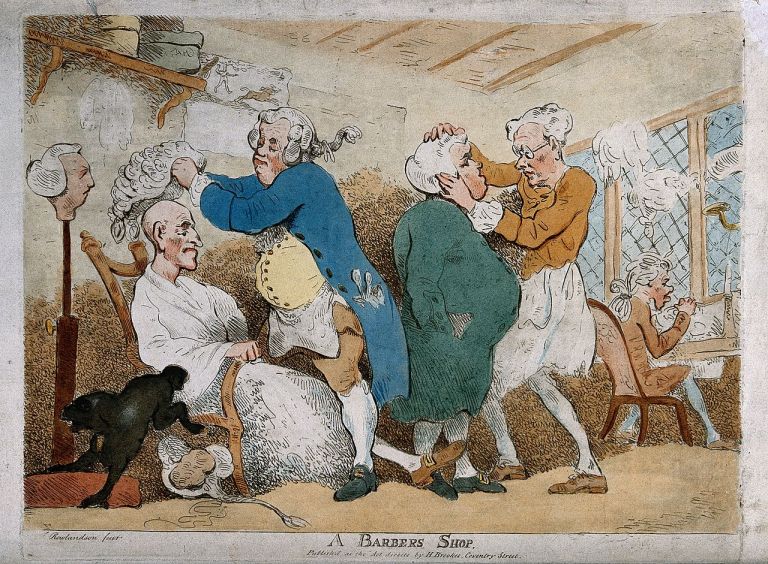
So rather than cut hair, Tom may more often have shaved it. According to this report:
“As natural products, [wigs] tended to attract lice. In an effort to ward off the bugs as well as mitigate the stench, the wearer of the wig would apply a special powder before wearing it, and men also frequently shaved their heads beneath the wigs to help discourage lice from taking up residence.”
Alternatively, Tom could have served the lower classes, or perhaps provided additional services.
Barbering and surgery were historically intertwined. Barbers were often skilled in bloodletting, tooth extractions, and other minor procedures.
Interestingly, it wasn’t until three years after Tom’s death, in 1745, that King George II passed several acts to separate surgeons from barbers.
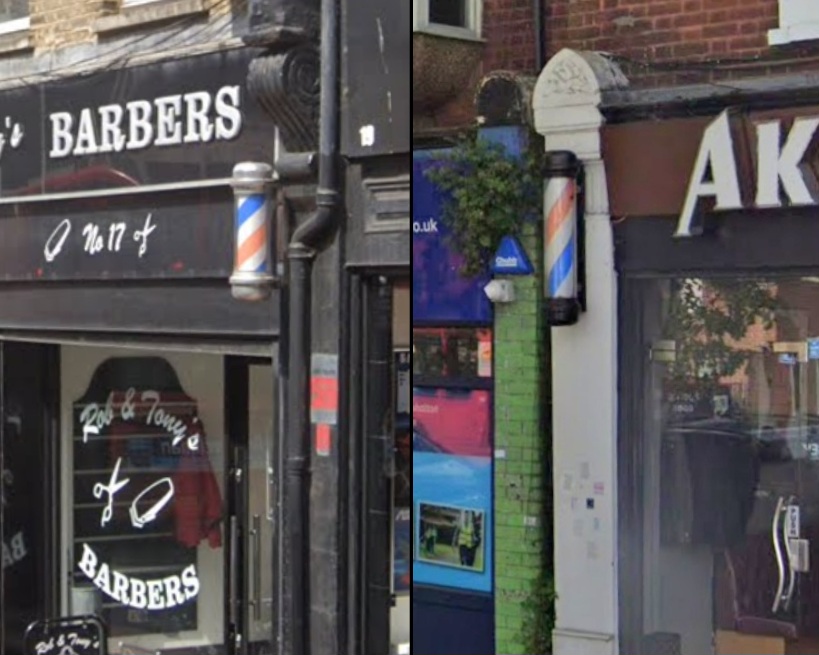
The red and blue polls outside the barbershops in Carshalton High Street are an ancient reminder of this tradition. Red representing blood, white the bandages and blue thought to be veins.
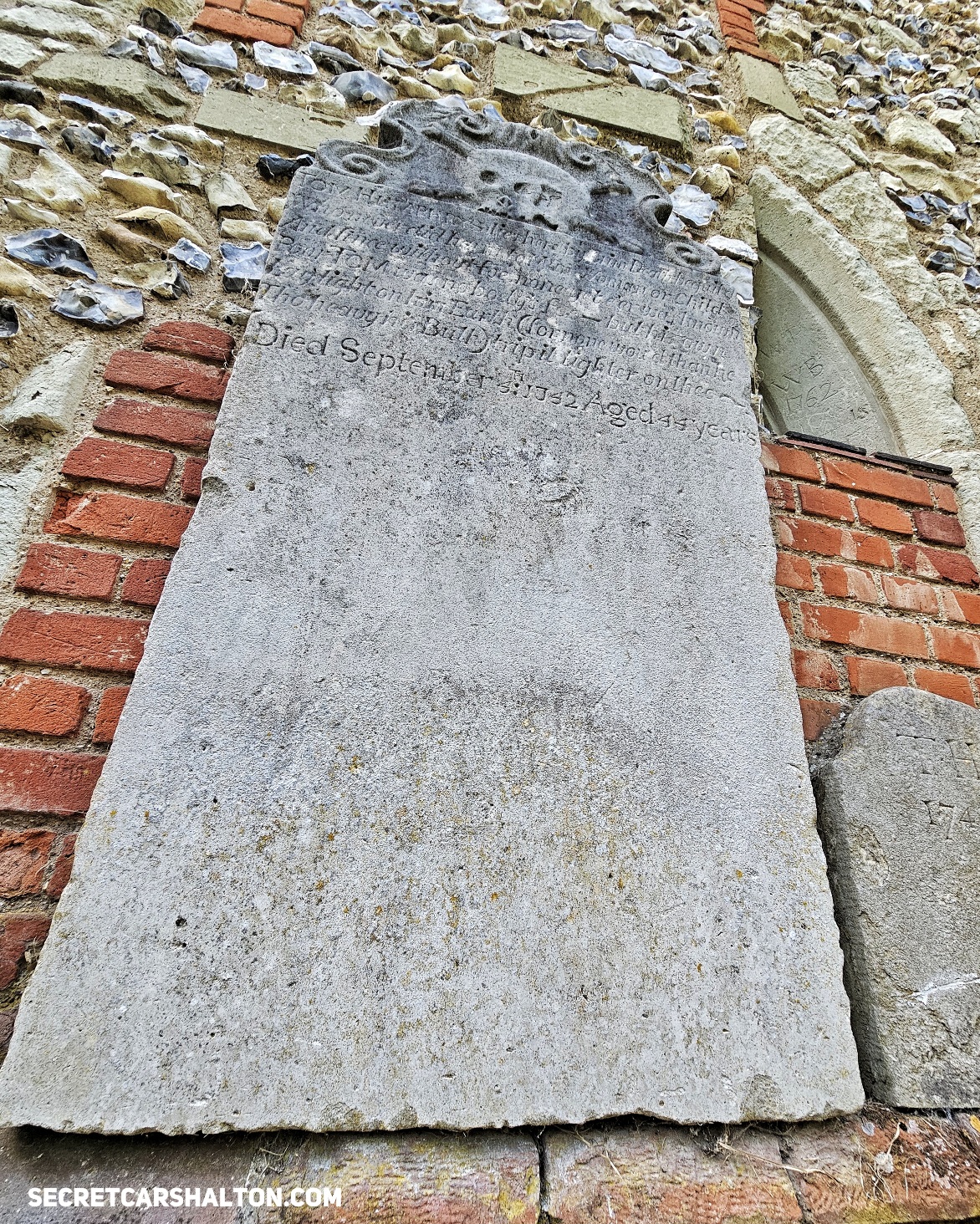
One final twist…
Just next to the headstone is a smaller gravestone with the initials T.H 1742.
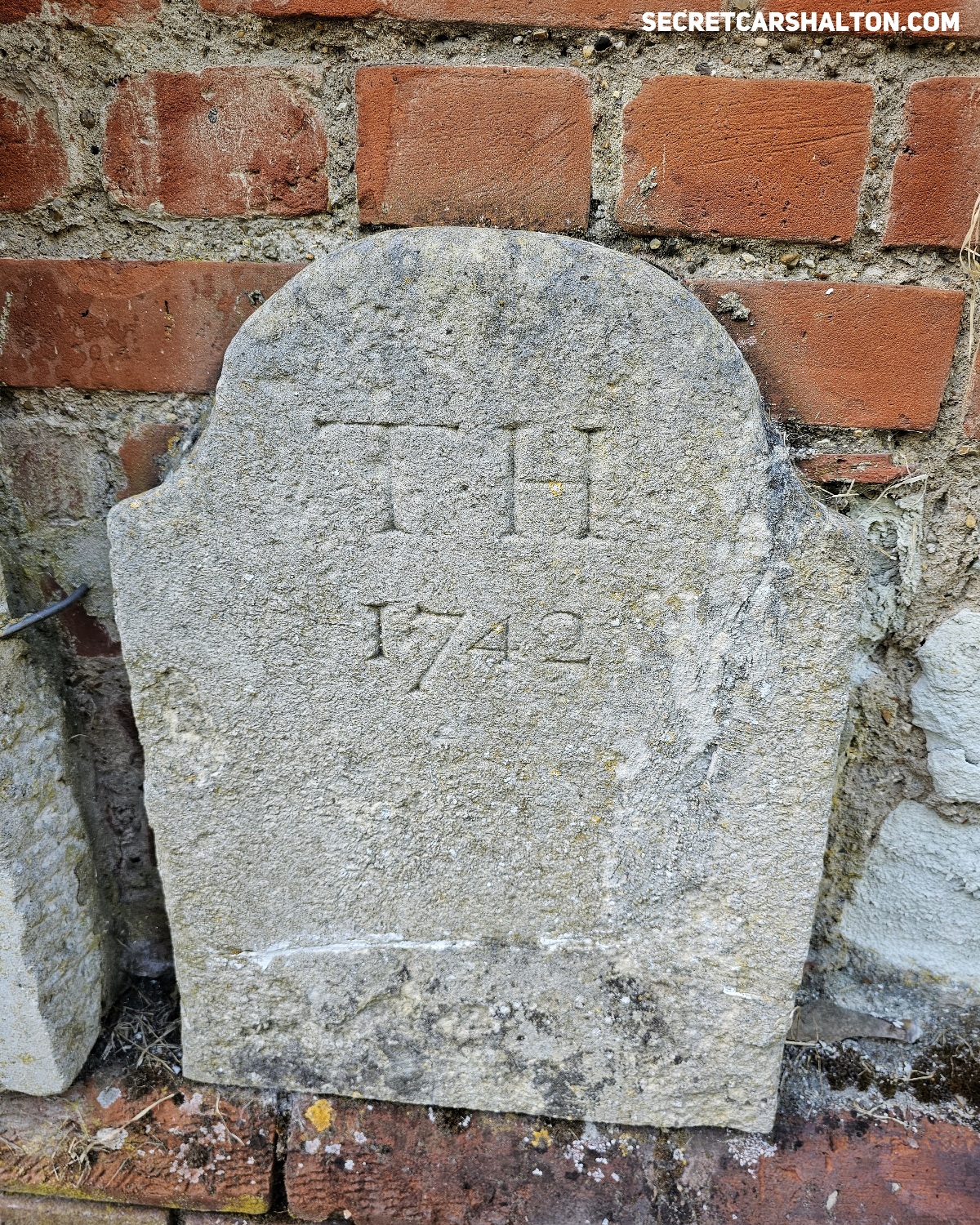
But why are there two headstones? Did he cut off his head? Did he have a pet? Was this a marker stone, with the larger stone coming later? Or was it a secondary grave stone that went at the foot of the grave? This last option seems most likely.
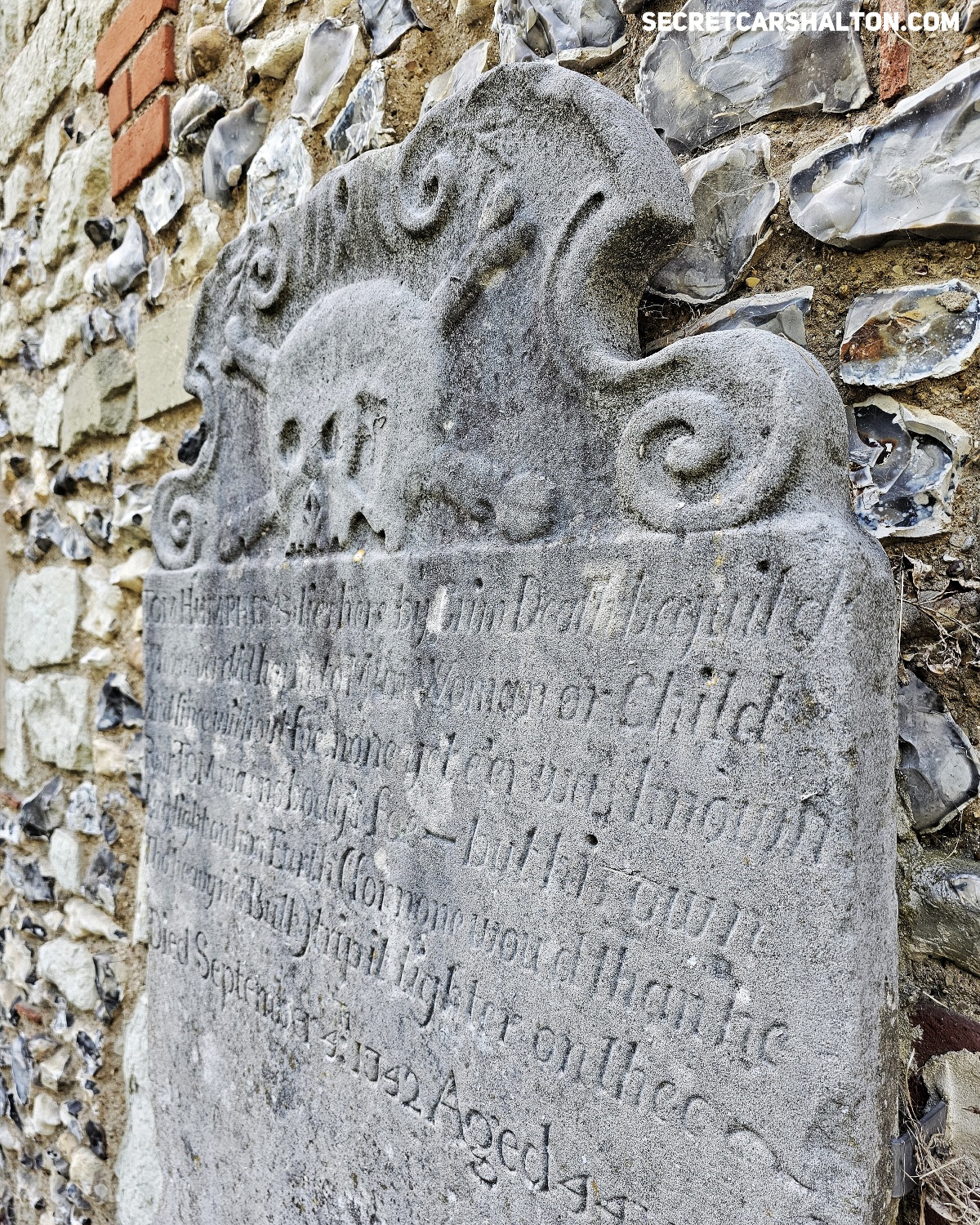
Finally, why the skull and crossbones? It doesn’t mean Tom was a wandle pirate on the side. It was a fashionable design symbolising mortality. It was a form of ‘Memento Mori’, a reminder of death, and was often used to express the acceptance of mortality
It’s interesting how the border has a wavy, or ‘wig-like,’ look to it.
The headstone isn’t in its original position. The grave may have been at the front of the church overlooking Carshalton Ponds. The headstone was then relocated to the rear, most likely during the Victorian era, when All Saints underwent an expansion.
The Victorians enjoyed the occasional oddity, and it was placed in a prominent position for all to view.
More graves, another time perhaps… We think the book mentioned is ‘A topographical history of Surrey, by E.W. Brayley’. This article throws up many questions. Anything to add?





The last line is presumably a play on ‘trip the light’, in reference to his dancing?
That phrase is attributed to the John Milton poem of 1645. Yes, good spot. And I think the first line is a hint at the stage/Shakespeare.
Unlikely to have taken his own life or wouldn’t have been buried in consecrated land
Interesting, thanks