

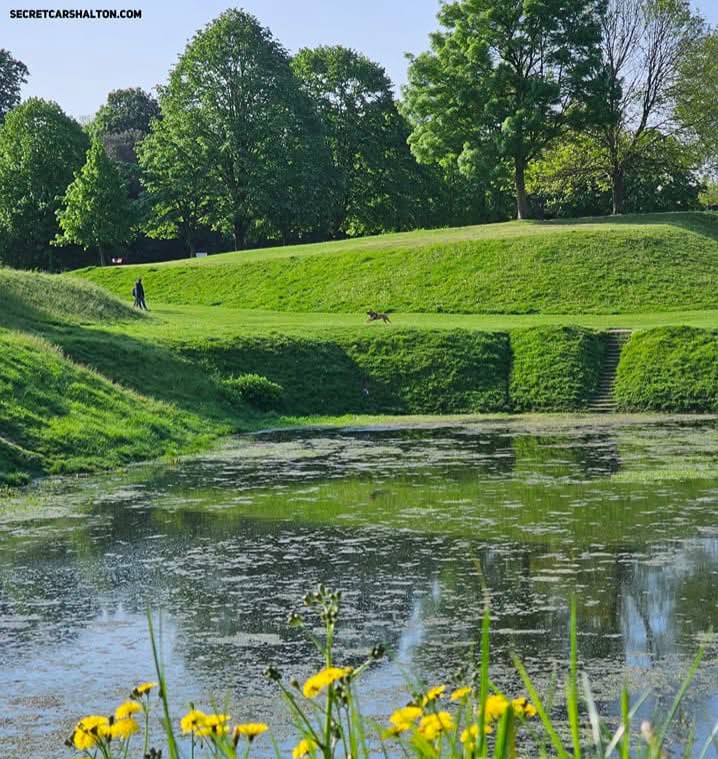
*Historical* One of the uses for the Hog Pit in Carshalton Park was to provide water for the long-lost mill situated in Carshalton High Street.

A recent view showing two of our wonderful Carshalton pubs, which almost stand next to each other.
Between them is where the ‘High Street Mill’ once stood. Over many years it had been used for drug-grinding, hook and eye making, flax dressing and spinning, and most recently for grinding corn.
The water to operate it originated from an area known as the Hog Pit, in Carshalton Park.
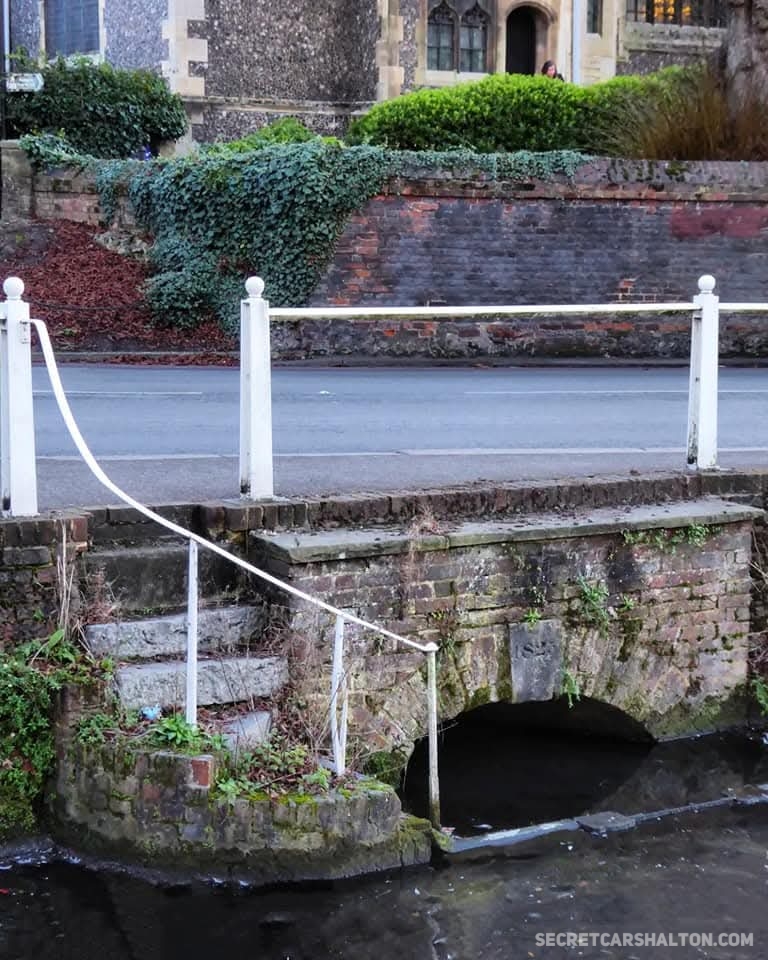
This water then flowed into the pond opposite the mill under a brick arch dated 1825.
The mill had a wonderful wooden clad exterior, once a popular finish on several nearby demolished buildings (more on those here).
A mill or engine house had existed on this site from at least 1778, and the High Street Mill was finally demolished around 1907.
Here’s a video which re-created how the mill once looked, based on an old photo.
In the photo, to the left of the church is a building marked Harwood Butcher. Walter Harwood was there from 1865 until circa 1903.
@secretcarshalton Carshalton once had at least 6 water mills powered by the River Wandle #watermill #riverwandle #lostbuildings #oldmills #Carshalton #southlondon #waterpower #unusualplaces #weirdworld #sustainability #londonhistory #oldsurrey #househistory #highstreethistory
Credits: London Borough of Sutton Museum and Heritage Service, Derek Bradford/the Carshalton & District History & Archaeology Society, Past on Glass, Andrew Skelton



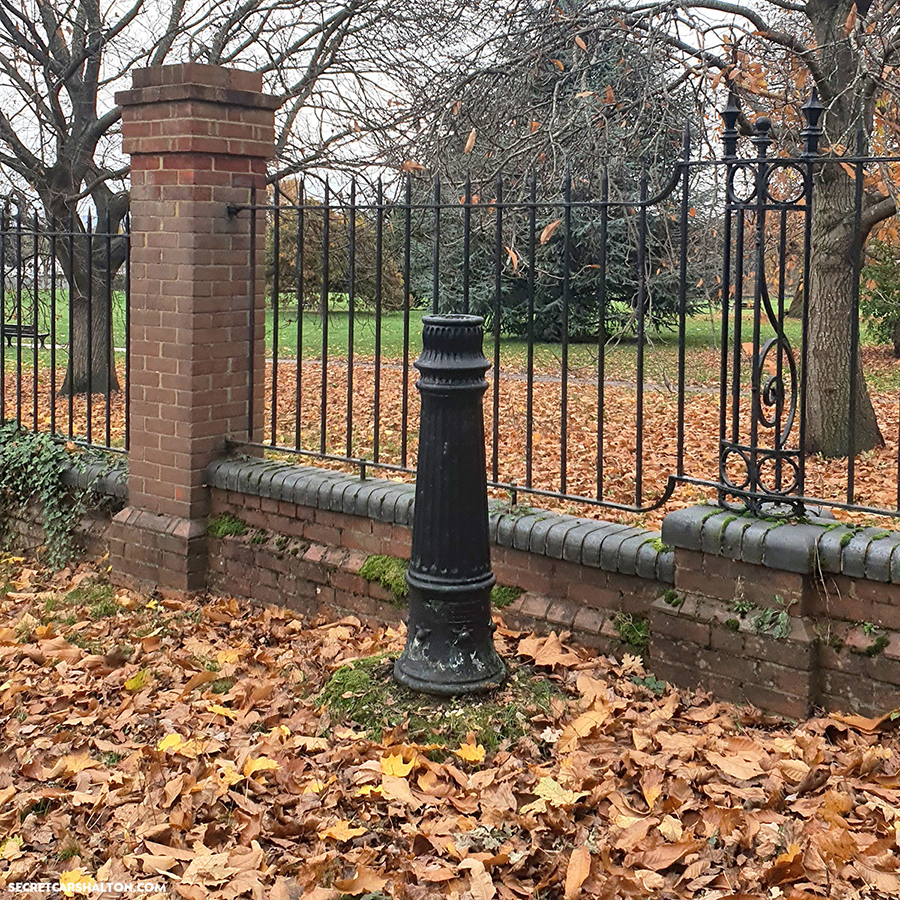



There is a culvert that runs from the Hog Pit to Carshalton ponds. It runs under No.8 Talbot Road garage.
I used to live at number 8 Talbot Road. In the garage there is, or was, a vehicle inspection pit that a former taxi driver owner had installed. The base of this pit is the brick culvert. I know this as my father and I had to replace a broken brick so that any dropped tools would not find themselves washed away. It often had running water passing through in the1960’s.
More likely the Hog Pit was a chalk quarry which filled with water so needed draining. The mill was therefore opportunist. The drain on the other side leads to the Grotto Canal and was therefore used to run the mill in Westcroft Road and others on the Wandle. The water was therefore split between the two. The supply leading to the High Street Mill may only have been culverted after Ruskin Road was raised for the trams.
It would have been good to see if the channel had once been open – I’d wondered that. Yes, it could have all been opportunistic.
great bit of hidden in plain sight local history