

*Historical* This incredible chalk cliff can be discovered within a short walk up Park Hill from Carshalton’s Windsor Castle pub – and it’s totally unique! Possibly the only survivor of its kind in the whole borough, perhaps in all of London.
Because, not only will you find the well-defined remains of a small chalk pit – but also the original Pit House built by, and for the people that worked in the quarry. This location is an incredible historic find.

This is a remarkable reminder of the major industry that once took place in and around Carshalton – all thanks to its geology – positioned on the environmentally rare chalk downloads on the edge of the North Downs. The chalk wall towers over the nearby buildings.


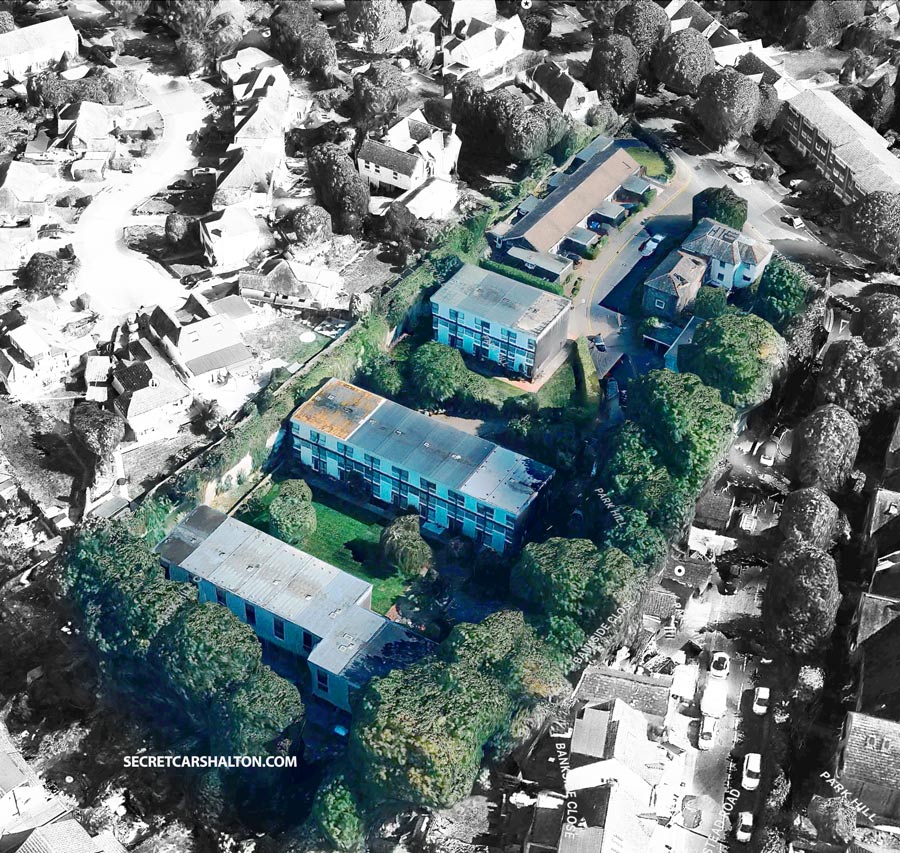
Secret Carshalton has scoured records and taken an external visual survey of the building with surveyor Richard Pocock, to see what we can discover. Join us as we visit Bankside Close…
At the bottom of the hill are the remains of a wonderful geological feature: a long wall of chalk.

Surviving Pit House with a fresh water spring!
At the entrance to the old chalk quarry you’ll find Pit (or Pitt) House, an amazing survivor.
The 3-storey building is thought to be dated circa 1808 – though it could date back even further, as according to Historic England “a building is shown in this position on a map of 1762”.
It’s most likely built of the flint quarried from the pit.
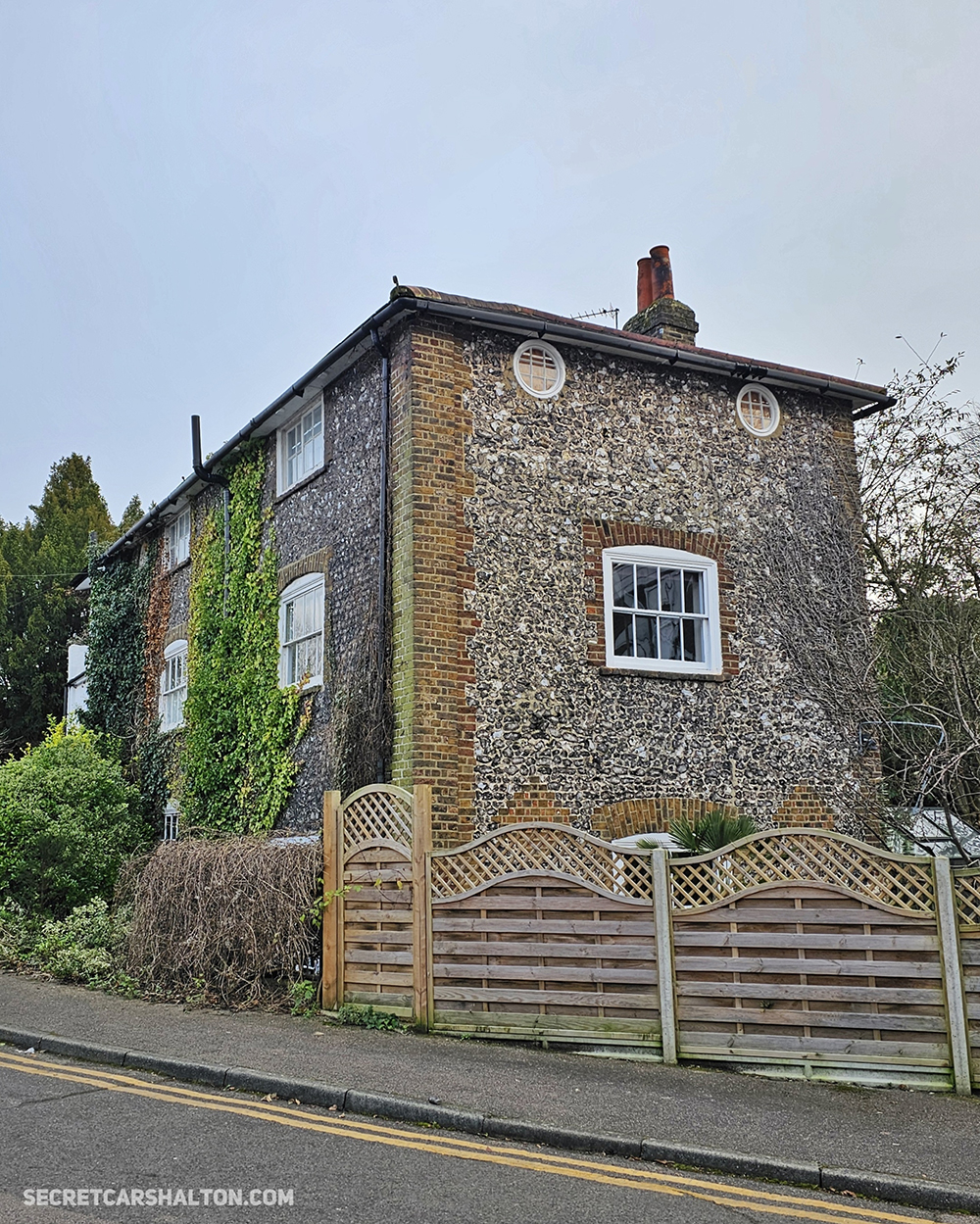
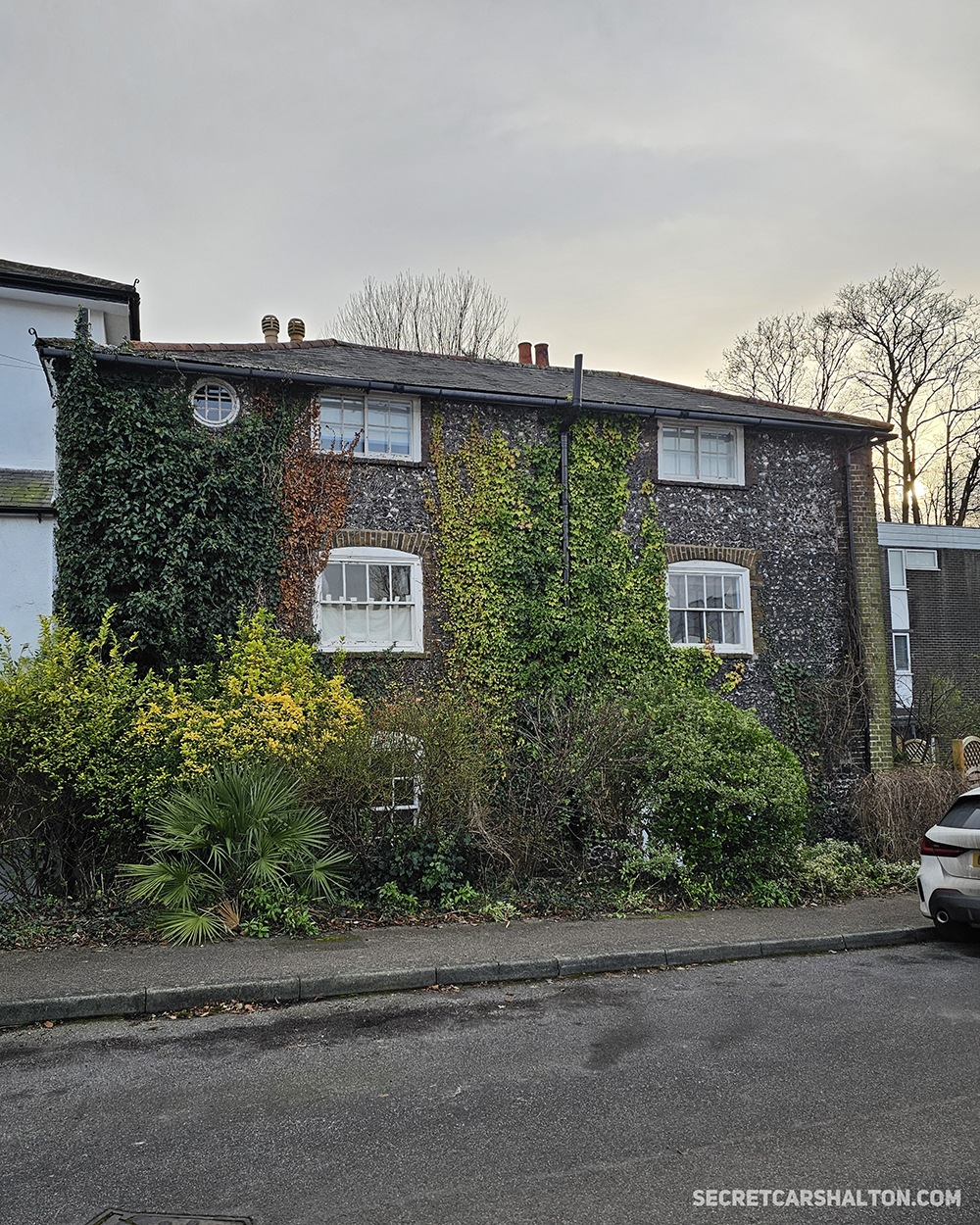
This house is believed to be built on land owned by Charles Francis. He owned all the land from here down to where the Windsor Castle pub was later built. The land was purchased from the last Lord of the Manor of Carshalton, William Taylor Blake.
Charles had a keen interest in geology and owned various businesses, one of which was listed as “Cement Manufacturers and Lime Burners”.
Someone called George Francis, most likely a family member, first lived in Pit House. George stayed for two years before the house was passed on to someone called James Walter Francis.
James Francis was listed as the kiln owner. There were lime kilns here. This is where chalk was heated to over 900 degrees to create a lime mortar.
The site included chalk pit, gardens, orchard, stabling, outbuildings and even a fresh water spring well.
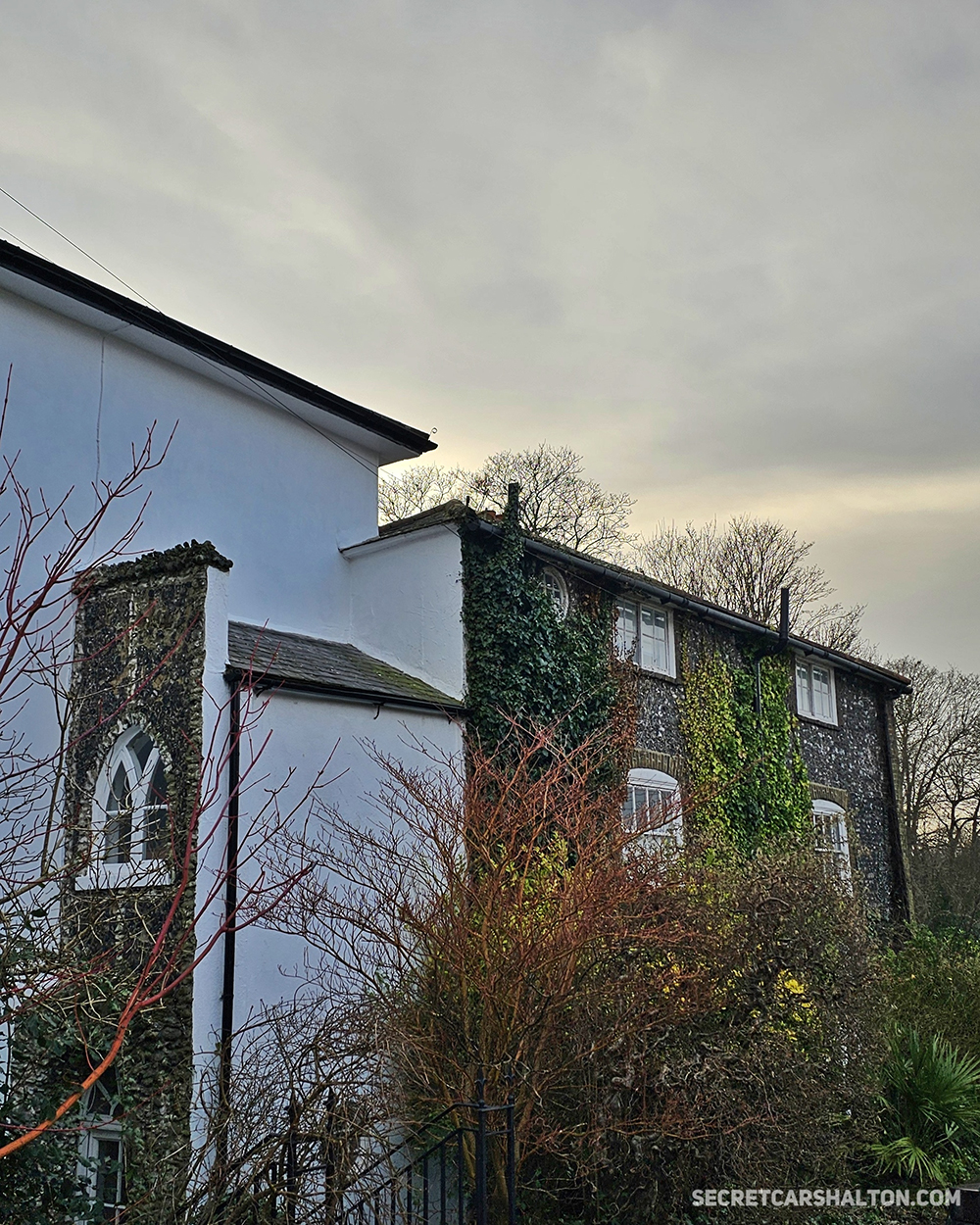
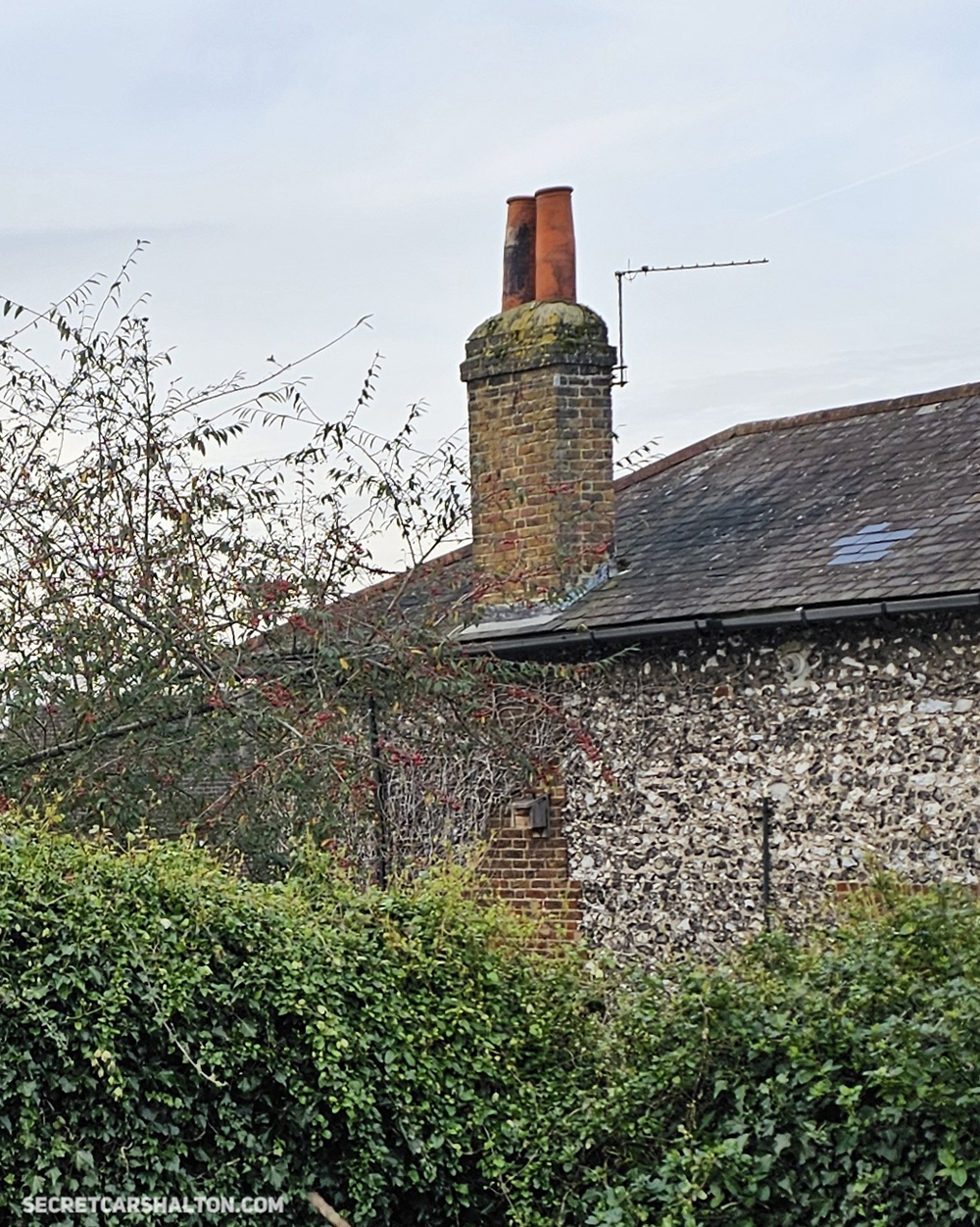
The Regency Cottage
The owners of the pit must have done well, as they managed to build this handsome home.
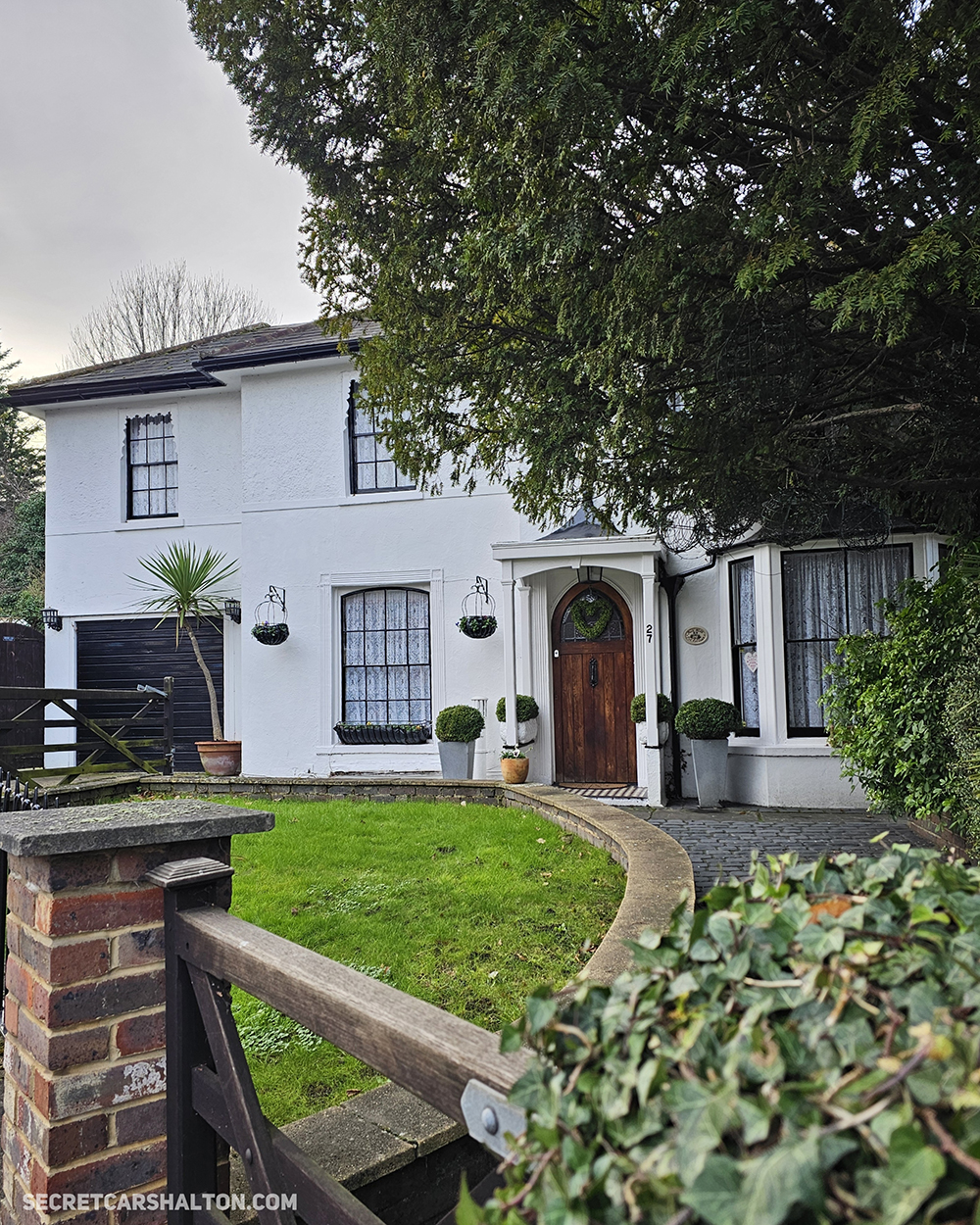
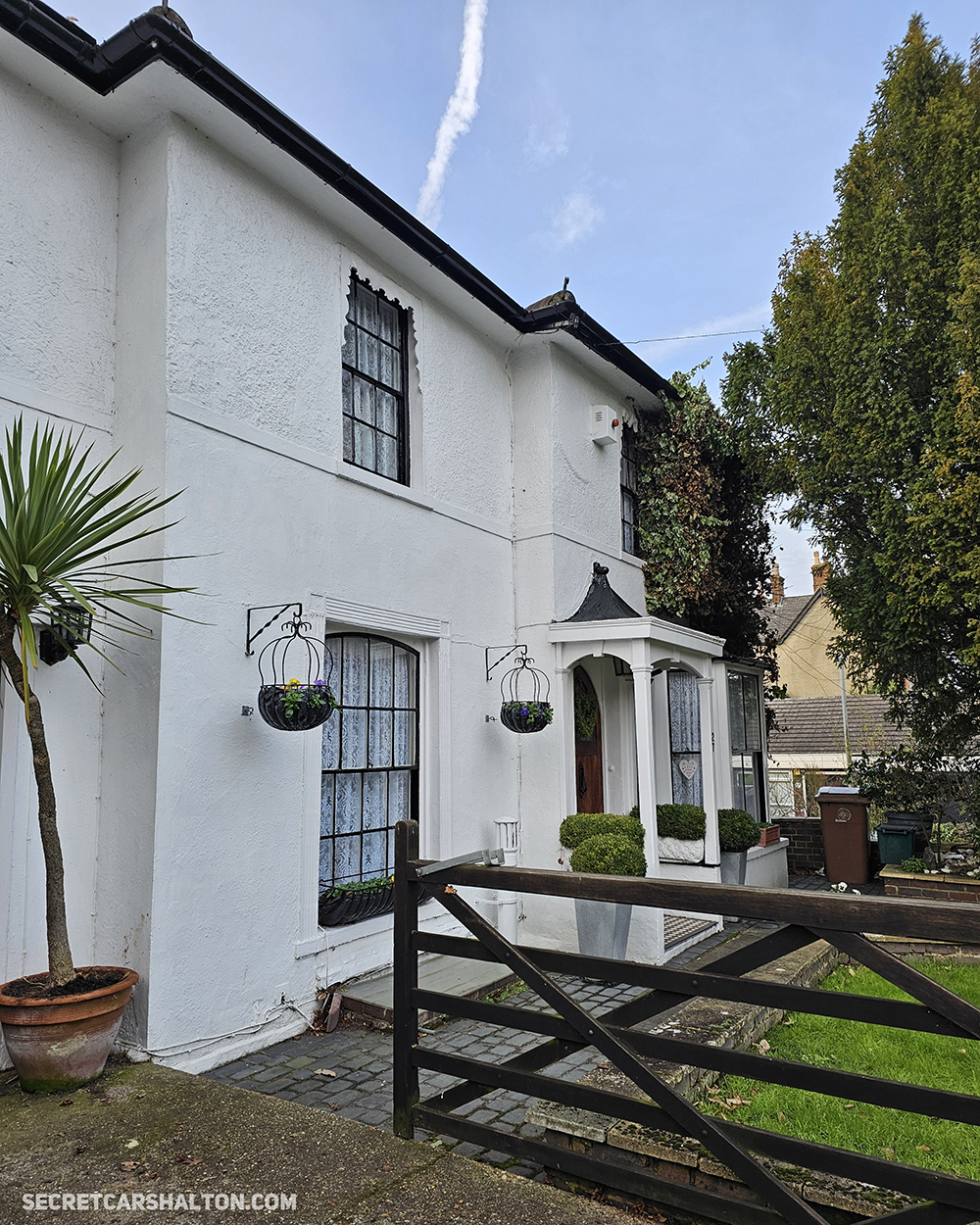
Not far from the centre of Carshalton you’ll find this beautiful old cottage, dated circa 1824. It’s situated facing Park Hill and sits by a cul-de-sac with some wonderful history.
By 1861, lime burning had ceased.
To give a sense of how important the family were, the obituary of Charles’ son (Charles Larkin Francis) in 1874 read, “To within a short period of his death he was the head of the firm of Charles Francis and Sons, cement manufacturers, of London and the Isle of Wight, whose business transactions extended to all parts of the world, by far the largest part of the trade coming from foreign countries.”
It also added, “The extensive fortifications and harbours of Odessa, Trieste, Cherbourg, and the Brazils owe a large portion of their strength and solidity to the cement exported by this firm.”
Lavender farmers
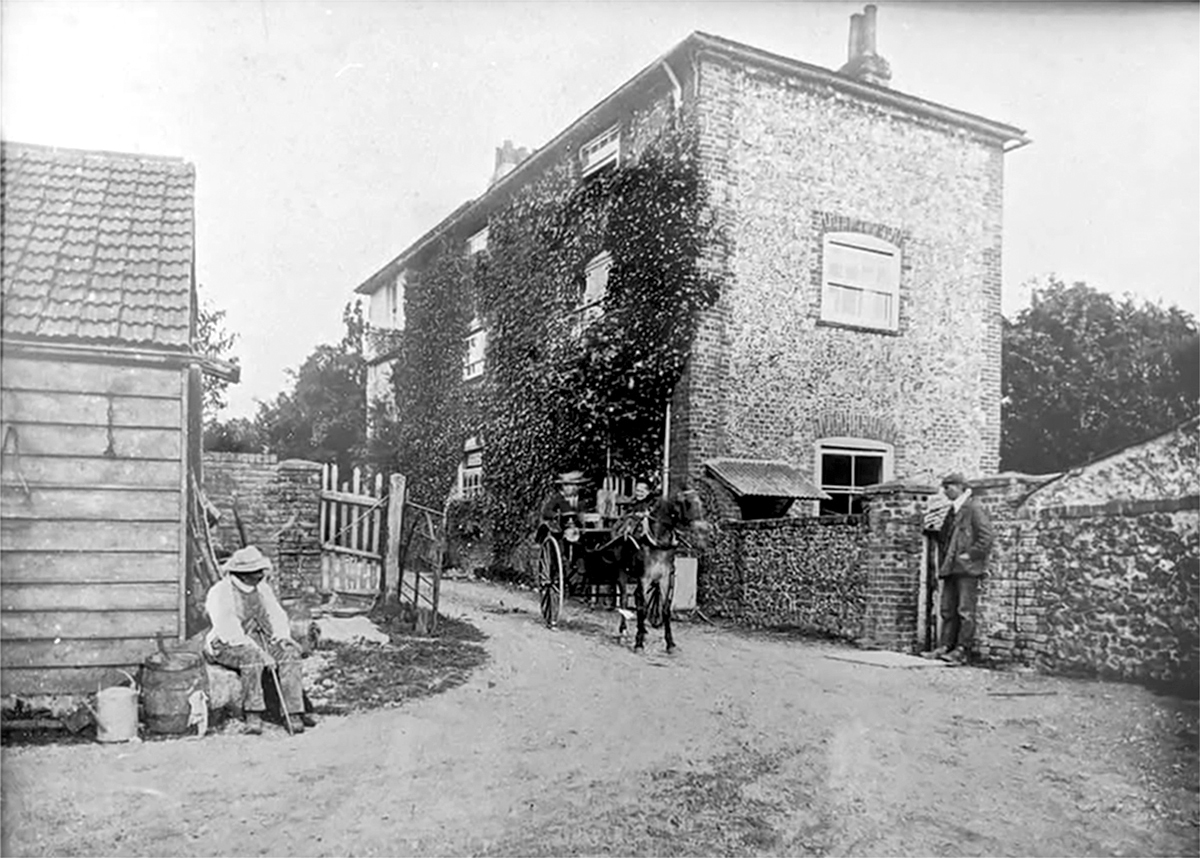
When it was sold around 1864, Pit House was lived in by James Letchford and family. Later it was owned by lavender farmers, and they were probably here when the nostalgic image below was taken.
Beautiful sunken garden
In 1934 the house and land became under the ownership of a lady gardener, who landscaped the quarry.
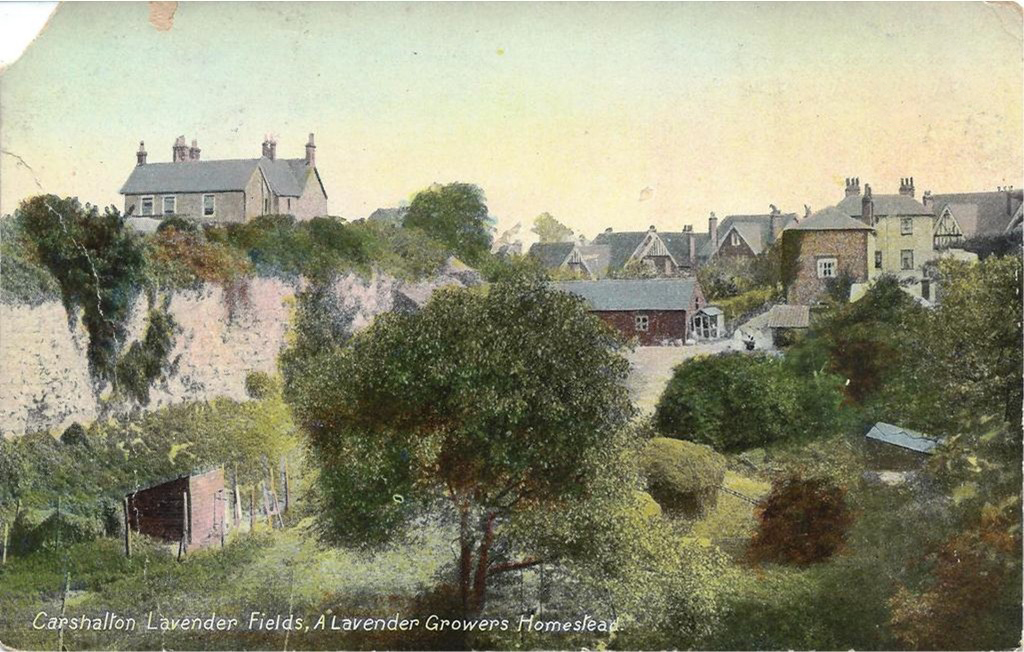
Sue Smith says, “My aunt was housekeeper to the Griffith-Hughes family, who lived in Pit House, now part of Bankside Close, Carshalton Beeches. When I was a child, I spent most of the school holidays there, in this lovely flint-faced house. The sloping gardens were magnificent, with a rockery, rose gardens and a huge kitchen garden, presided over by Jago, a very quiet and hardworking gardener.
“The formal gardens led down to a tennis court as Mrs. Griffiths-Hughes was an ardent tennis player. The gardens were surrounded by high chalk cliffs. The deeply sloping gardens were filled in level as a base for the new houses in Bankside Close. The very pretty Victorian cottage at the entrance to Bankside Close was also part of the Pit House estate and families working for the Griffiths-Hughes lived there.”
The house and grounds had fallen into disrepair by the 1960s but fortunately the old buildings were listed in 1974 protecting them for future generations.
The legend of St Paul’s
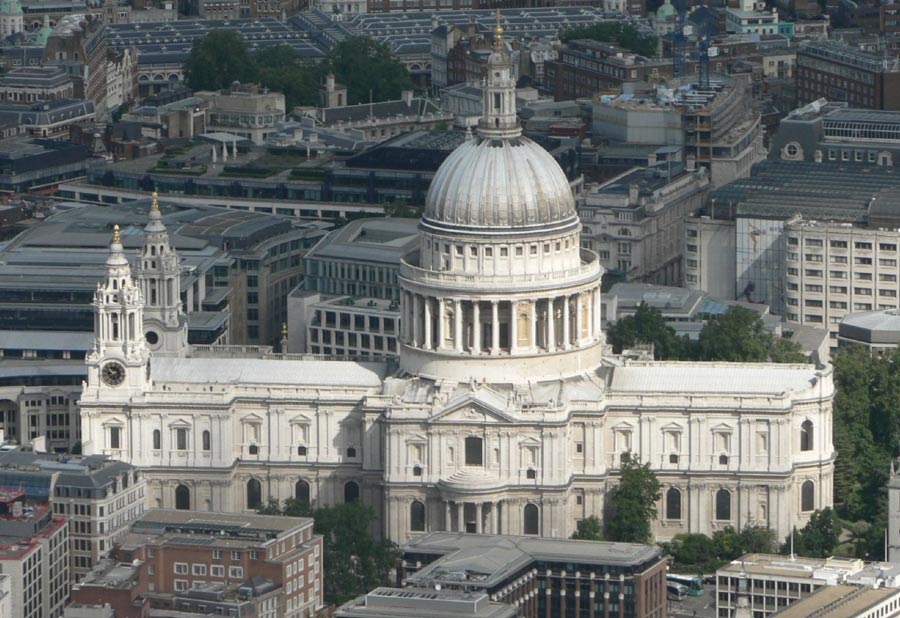
There’s a legend that suggests chalk from here was used for a famous London landmark built in 1675. Sue Smith says, “I was told that the chalk quarried from the pit was used to fill the columns in St Paul’s Cathedral”. Records show there was a middle ages quary here dating back to 1252. Though it’s hard to be precise as there were so many chalk pits dotted around Carshalton.
Heather Glenser, a local historian who once lived at the house, said in 2002, “Early records show chalk from this quarry was supplied to Westminster in 1253.”
She added, “Towards the end of the war the house was sold again and by the 1960s it had fallen into disrepair. In the early 1970s it was sold to a developer.”
As always, we try and ensure the information provided here is is accurate, as far as we’re aware at the time of writing. However, if you spot an error or omission we’d be grateful if you could mention it in the comments below. We appreciate your feedback.
⚠️ Please note there is no public access at this site and please be respectful and abide by the private signage.






I was talking to my mother, who was reminiscing of her childhood days and Pit House was mentioned. Her mother’s mother (my great grandmother) used to live there. My mother remembers the beautiful gardens and especially the tennis courts. She remembers that during WWII that her grandmother used to have recuperating soldiers there. My grandmother then married and moved down into a large house in Park Hill (‘Kohima’) where she had two daughters, one being my mother. I think the ‘local family’ that is mentioned in a few articles is where my great grandmother fits in. My mother is now 95 so her memories are from the 1930s and 1940s.
Thanks for sharing. What was your great grandmother’s name?
Helen Frewer via Facebook
“My parents owned Pit House from the mid 1970s until 2006 when we sold it after they died. You quote my mother Heather in your fuller article. Pit House at the back is the older building and Pit Cottage is partly built on top of part of Pit House. There was a tunnel under part of the house (sadly blocked up before we owned the house) and the remains of one of the original lime kilns in the garden.”
We lived in the house at the front 27 Park Hill. It was a Georgian House attached to Pit House.
To Sue Smith – I think you were Susan Williams and your Aunt was Gladys. We used to play together when you were there on holiday. My dad looked after the gardens. So sad to see what happened to that beautiful spot. I remember going to see the Hughes’ at their new home after they left there. Such a long time ago now. I hope you see this.
Excellent article. As a keen geology/palaeontology enthusiast I shall have to check it out. I’m from the south downs so to see such an exposure of chalk so close by makes me feel right at home!
How utterly fascinating. I think I shall do a Video about this with full acknowledgment to Secret Carshalton of course.
dont forget the huge chalk pit that was on the site of what is now the site of B+ Q in Sutton. I was told at school in our local history studies , that it was the chalk from here that was used to help build St Pauls …
Records can be vague, so we can’t always be sure what chalk pit was referred to – as there were so many large and small quarries in the area. I’m fascinated by the old BQ site – i may add a post about that too at some point.
I worked in B&Q for 17yrs on the night shift. The goods lift on the ground floor in the warehouse, if left standing for a long period would take you down to the basement in the chalk pit despite pressing the button for the upper floor. It was really scary down there. I started working in that store before it was ever opened to the public. We saw many freaky things happen in that store at night and there was an area none of us liked working in on our own. I heard a story of a coach and horses tumbling into that pit way back in time but have never found further information to verify that.